Picture a sticky Staten Island summer afternoon: the humidity’s up, the thermostat is set, and suddenly your air conditioner stops cooling. Comfort disappears fast, and emergency repairs can get pricey.
The good news? Many breakdowns start as small, preventable issues. A little routine upkeep helps your system run more efficiently, reduces wear and tear, and can extend the life of your equipment.
At Bob Mims Heating & Air Conditioning, we’ve been serving Staten Island’s heating and A/C needs since 1950. Our team focuses on quality-first service and solutions tailored to your home, not a one-size-fits-all approach.
If your AC hasn’t been inspected recently, it’s smart to schedule service before the season’s peak heat puts your system to the test.
AC Maintenance Checklist Every Homeowner Should Follow
Not every maintenance step requires a technician. These homeowner-friendly tasks can help your system perform better between professional tune-ups. A few quick checks now and then can improve efficiency, reduce strain on key components, and help you avoid surprise problems when the heat is at its worst.
Replace or Clean the Air Filter Regularly
A clogged filter is one of the most common (and easiest to fix) reasons an AC struggles. Check your filter every 30–60 days during the cooling season, then replace disposable filters or clean reusable ones based on the manufacturer’s guidance. Always use the correct filter size and the appropriate type for your system so airflow stays steady and the unit doesn’t have to work harder than it should. Clean filters support stronger airflow, better efficiency, and less strain on the blower and other components, so if airflow still feels weak after a fresh filter, it may be time for a professional inspection.
Clear Debris Around the Outdoor Unit
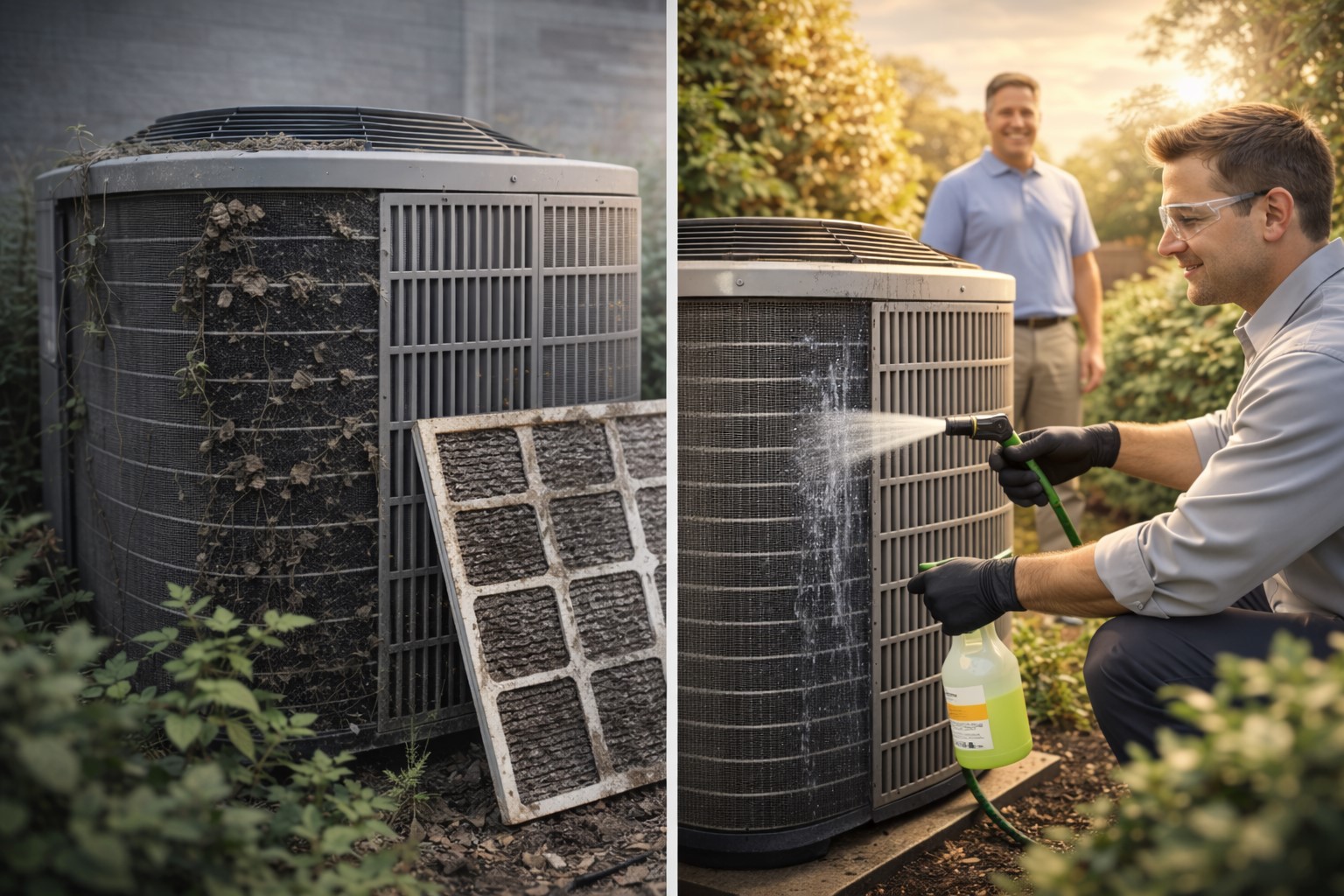
Your outdoor condenser needs breathing room to release heat. Make it a habit to remove leaves, dirt, and grass clippings from around the unit, and trim shrubs or plants so you maintain about 2–3 feet of clearance on all sides. You can also gently rinse dirt from the exterior coil surface with a garden hose using light pressure. Avoid opening the cabinet or cleaning internal coil surfaces yourself, sharp fins and electrical components can be hazardous. Staten Island’s pollen and humid summer conditions can accelerate buildup, so a quick monthly check is worth it; if you see bent fins, hear unusual noises, or notice reduced cooling, a technician can safely take a closer look.
Inspect Air Vents and Registers
Vents and registers help deliver cool air evenly throughout your home, so keep them open and unobstructed (furniture, rugs, and drapes can block airflow more than you’d think). Vacuum registers periodically to reduce dust buildup, and pay attention to hot spots or uneven temperatures from room to room. If certain areas stay warmer even after clearing obstructions, you may be dealing with airflow restrictions or ductwork issues that need a professional evaluation.
Check Your Thermostat Settings
Sometimes the problem is the control, not the cooling equipment. Confirm your thermostat is set to Cool, double-check the temperature setpoint, and replace batteries if your thermostat uses them. If you’re looking for more consistent comfort and better day-to-day efficiency, many homeowners also consider a programmable or smart thermostat to help manage schedules and reduce unnecessary runtime without sacrificing comfort.
Look for Signs of Drain Line Problems
As your AC removes humidity, it creates condensation that should drain away through the condensate line. If that line clogs, water can back up and cause leaks, or even shut the system down, so watch for water pooling near the indoor unit, musty odors, or higher indoor humidity. If you suspect a clog, avoid taking the system apart; a professional can clear the line safely and help prevent water damage.
What to Do If You Notice AC Problems
Even with regular homeowner maintenance, some issues require professional attention. If your AC starts acting up, try these steps first:
- Replace the air filter if it’s dirty or clogged.
- Check thermostat settings (Cool mode, correct temperature, batteries).
- Inspect the circuit breaker to confirm power hasn’t been interrupted.
- Clear debris around the outdoor unit and make sure it has proper airflow.
- Confirm indoor vents are open and not blocked.
If your system still struggles after these checks, it’s time to call an HVAC professional.
Call for service if you notice:
- Warm air coming from vents
- Loud grinding or rattling noises
- Frequent cycling on and off
- Ice buildup on the unit
- Sudden spikes in energy bills
Ignoring these warning signs can lead to bigger failures and more expensive repairs.
How Regular AC Maintenance Prevents Expensive Repairs
Preventative maintenance is one of the most cost-effective ways to protect your air conditioning system because it helps catch small issues before they become major breakdowns. During a professional maintenance visit, technicians typically inspect electrical connections, clean evaporator and condenser coils, check refrigerant levels, test system controls and safety features, flush the condensate drain line, and evaluate airflow and duct performance. This full-system checkup helps keep your AC running safely and efficiently, especially when Staten Island’s humidity and seasonal pollen put extra strain on equipment.
Annual maintenance can pay off in several ways, including lower energy costs, a longer equipment lifespan, stronger and more consistent cooling, better indoor air quality, and fewer mid-summer emergencies. If you keep up with filters, airflow, and basic visual checks, and schedule professional maintenance each year, you’ll greatly reduce the odds of an urgent, high-cost repair during the hottest weeks of summer.
Why Clean AC Coils Matter for Efficiency
Even light dust buildup on coils can reduce efficiency. When coils get dirty, your AC has to work harder to transfer heat, increasing energy use and putting extra strain on critical components.
Regular cleaning and professional inspections help maintain proper heat transfer, support healthy airflow, and keep your system running efficiently.
FAQs About AC Maintenance in Staten Island
Question: How often should AC maintenance be performed?
Answer: Most HVAC professionals recommend annual AC maintenance, ideally in spring before the cooling season begins. Scheduling service before summer helps ensure your system runs efficiently during Staten Island’s hottest months.
Question: How much does AC maintenance cost in Staten Island?
Answer: Costs vary depending on system type and service scope. However, routine maintenance is far less expensive than major repairs or a full system replacement.
Question: Can homeowners perform AC maintenance themselves?
Answer: Yes, basic tasks like replacing filters and clearing debris can be done by homeowners. However, professional inspections are essential for checking electrical components, refrigerant levels, and overall system performance.
Question: What are the signs my AC needs maintenance?
Answer: Common signs include reduced airflow, uneven cooling, higher energy bills, strange noises, or unusual odors coming from the system. If you notice any of these issues, scheduling a professional inspection can help prevent more serious problems.
Question: Does regular maintenance extend AC lifespan?
Answer: Yes, regular maintenance helps reduce wear on critical components. Over time, this preventative care can help your AC system last several years longer than a neglected unit.
Need Help Keeping Your AC Summer-Ready?
If you have questions or want professional maintenance from a team that puts quality above all else, reach out to Bob Mims Heating & Air Conditioning. Our friendly team will help you choose the right next step for your home, whether you need a seasonal tune-up or troubleshooting for a comfort issue. We’ll help you keep your home comfortable all season long, backed by decades of Staten Island experience.
Still have questions about AC maintenance? Contact Bob Mims Heating & Air Conditioning today for expert guidance and reliable service in Staten Island, NY.